

How Long Does Plaster Take to Dry Before Painting?
More advice
Fresh plaster can make a room look nearly finished, but it is not ready for paint simply because the surface feels firm.
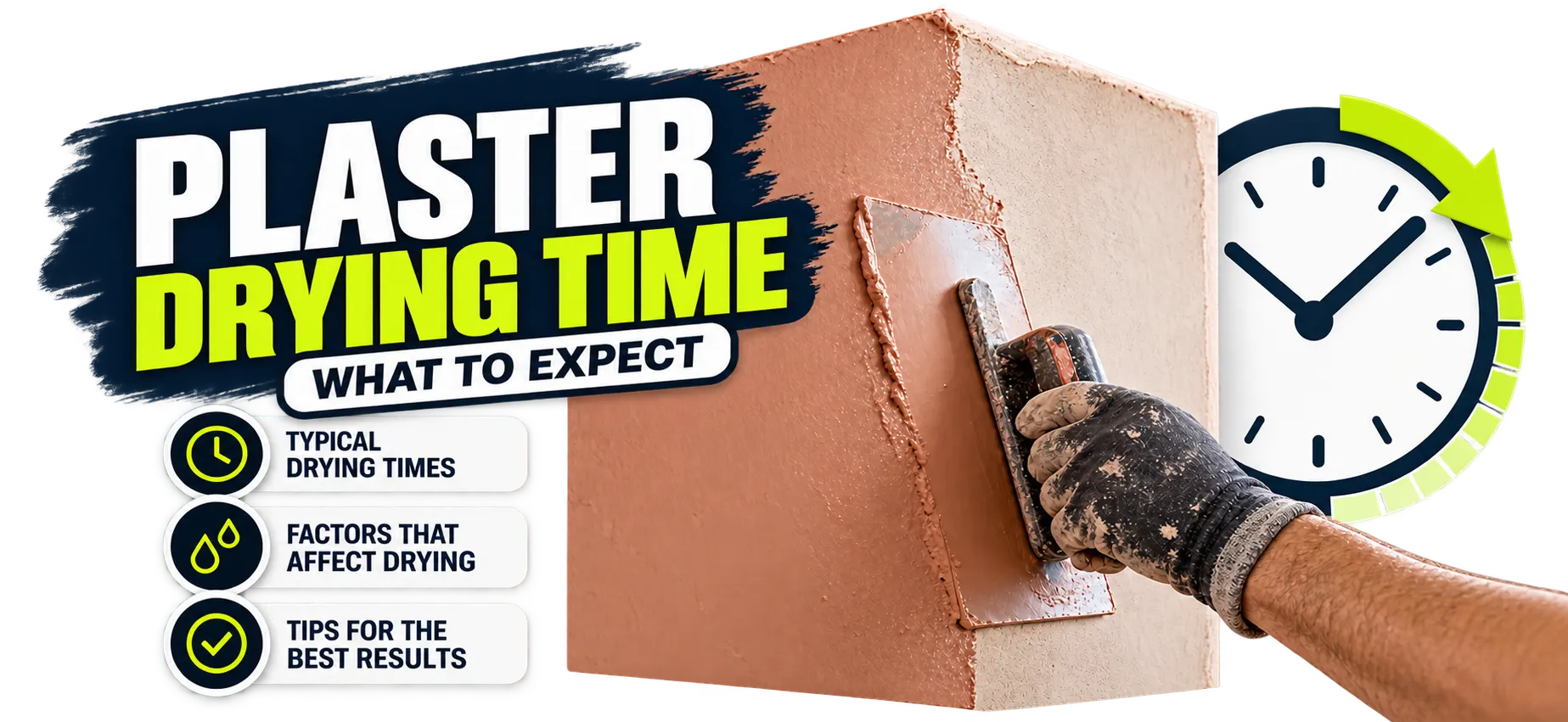
Plaster needs to dry properly before decorating. How long that takes depends on the thickness of the plaster, the background, room temperature, humidity and ventilation.
A thin skim over a suitable existing wall may dry relatively quickly, while deeper repairs or thicker plasterwork can take much longer. That is why the condition of the surface is a better guide than relying on one fixed number of days.
Why there is no single drying time
Every plastering job contains different amounts of moisture. A skim coat is thin, whereas repaired areas or new backing work may contain considerably more material.
The background also changes how the wall behaves. Plasterboard, old plaster and masonry absorb moisture differently, so one section of a room may lighten faster than another.
Paint manufacturer guidance also allows for this variation. Some manufacturers note that new plaster can take several weeks to dry fully in certain conditions, which is why rushing to decorate is rarely worthwhile.
What does drying plaster look like?
Fresh plaster is normally darker when wet and becomes paler as it dries.
It is common to see a patchwork of lighter and darker areas for a while. That does not necessarily mean something has gone wrong; thicker sections and colder parts of the room can simply take longer.
Before decorating, the surface should look consistently dry rather than showing obvious darker damp areas.
Colour is not a laboratory moisture test, but it is a useful practical sign when combined with adequate drying time.
Ventilation matters more than aggressive heat
Normal airflow helps moisture leave the room. Where conditions allow, sensible ventilation and normal background heating are usually better than trying to force the surface dry as quickly as possible.
Pointing powerful heaters directly at fresh plaster can create very uneven conditions. The goal is steady drying throughout the room, not getting one visible area pale as quickly as possible.
If the property is particularly cold, damp or unoccupied, it is worth asking the plasterer what conditions they recommend for the work completed.
Why painting too soon causes problems
Paint needs a suitable, dry surface to bond to. If the plaster still contains excess moisture, the decorative finish may not perform as intended.
Possible problems include patchiness, poor adhesion, peeling or the need to redecorate sections later.
Waiting until the plaster is ready is almost always easier than trying to correct a paint finish that was applied too soon.
What is a mist coat?
Once the plaster is fully dry, bare plaster normally needs an appropriate first coat before standard finishing coats are applied.
This is often called a mist coat. The purpose is to deal with the high absorbency of new plaster and create a suitable base for further decoration.
The exact method depends on the paint system. Follow the instructions for the product you are actually using rather than assuming one dilution ratio works with every brand.
Why are some patches drying more slowly?
Different drying speeds within one room can be normal. Deeper repairs, thicker plaster, cooler external walls and areas with less air movement can all stay darker for longer.
What matters is the direction of travel: the wall should gradually become more consistent as moisture leaves it.
If one patch remains persistently damp, becomes wetter or is associated with staining, a leak or another moisture problem may need to be ruled out before decorating.
What about ceilings?
Ceilings need the same patience as walls. They can sometimes dry differently because of room temperature, airflow and the amount of plaster required to correct the existing surface.
If a ceiling has been overboarded or heavily repaired, the overall job may also contain more new material than a simple wall skim.
See our Ceiling Plastering service →
When should you start decorating?
Start when the plaster is fully dry and you can follow the paint manufacturer’s new-plaster instructions with confidence.
Do not decorate to meet an arbitrary date if the wall is still visibly damp. If you have booked a decorator, give yourself enough flexibility for the plaster to dry naturally rather than creating pressure to paint too early.
Read: How to Look After Newly Plastered Walls →
Our practical advice after a plastering job
At M&M Coloured Rendering & Plastering, we would rather a customer wait a little longer than spoil a good plaster finish by decorating too soon.
Keep the room reasonably ventilated, avoid aggressive forced drying and contact us if an area is behaving differently from the rest of the work.
Quick answer: there is no universal plaster drying time. A thin skim can dry much faster than thicker plasterwork, while temperature, ventilation and the background also matter. Wait until the surface is consistently dry before decorating and follow the paint manufacturer’s instructions for new plaster.
Related articles
Ready to get started?
Send us a few details and we'll get back to you with a free, no-obligation quote.
 Call
 WhatsApp
 Free Quote